![image of a customer service representative (focusing on workspace) [background image]](https://cdn.prod.website-files.com/686ff0f42c677102ebc56fac/6933456239e40715611d434c_32af23a5-b687-47c9-b40e-e72de63dec14-693344e0e11f8.webp)


Last updated on:
December 5, 2025
Heepsy has positioned itself as an accessible entry point into influencer marketing, offering brands and agencies a platform to discover and connect with creators across major social networks. After thorough testing and analysis, this comprehensive review examines every aspect of the Heepsy experience to help you determine if this platform meets your influencer marketing needs.
Overview and First Impressions
Heepsy operates as an online influencer marketing platform that connects brands with content creators across Instagram, TikTok, YouTube, and Twitch. Founded in 2016 by Xabier Vicuña in Bilbao, Spain, the platform emerged from direct experience with the challenges of influencer marketing. The database now includes over 11 million influencer profiles from around the world.
The website presents a clean interface that makes navigation straightforward. The platform positions itself as a budget-friendly alternative to enterprise-level tools, with pricing that starts at $49 monthly for the Starter plan. The basic structure includes influencer discovery, analytics, list management, and campaign tools.
The initial setup requires creating an account and selecting a pricing tier. The free trial provides limited access to analytics reports, giving you a chance to evaluate the interface before committing. The platform structure becomes clear quickly, though understanding which features require plan upgrades takes some exploration.
Search and Discovery Tools
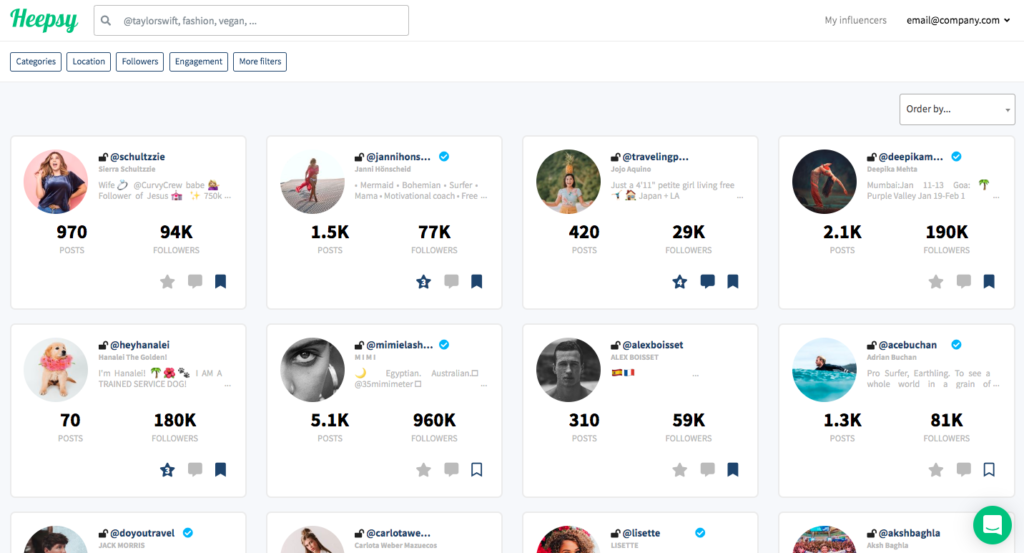
The search engine forms the core of Heepsy's value proposition. You can filter influencers by platform, location, category, follower count, and engagement rate. The AI-powered system analyzes profiles and segments results based on your specified criteria. For Instagram searches, you get additional filters for audience authenticity and engagement metrics.
The database coverage appears comprehensive for major markets and popular categories. Finding influencers in fashion, beauty, fitness, and lifestyle proves straightforward. Niche categories and smaller markets show less coverage, which may limit options for specialized campaigns. The platform includes micro-influencers starting at 5,000 followers on Instagram and 1,000 subscribers on YouTube.
Search results display key metrics at a glance. Each profile shows follower count, engagement rate, location, and category tags. The interface allows you to click through to detailed analytics or add profiles to lists for later review. The speed of results delivery works well, with most searches completing in seconds.
The lookalike feature helps expand your search by finding similar influencers to those you've already identified. This function works better with well-established profiles than with smaller creators. The keyword and hashtag search options provide additional ways to find relevant influencers based on content themes.
Analytics and Verification
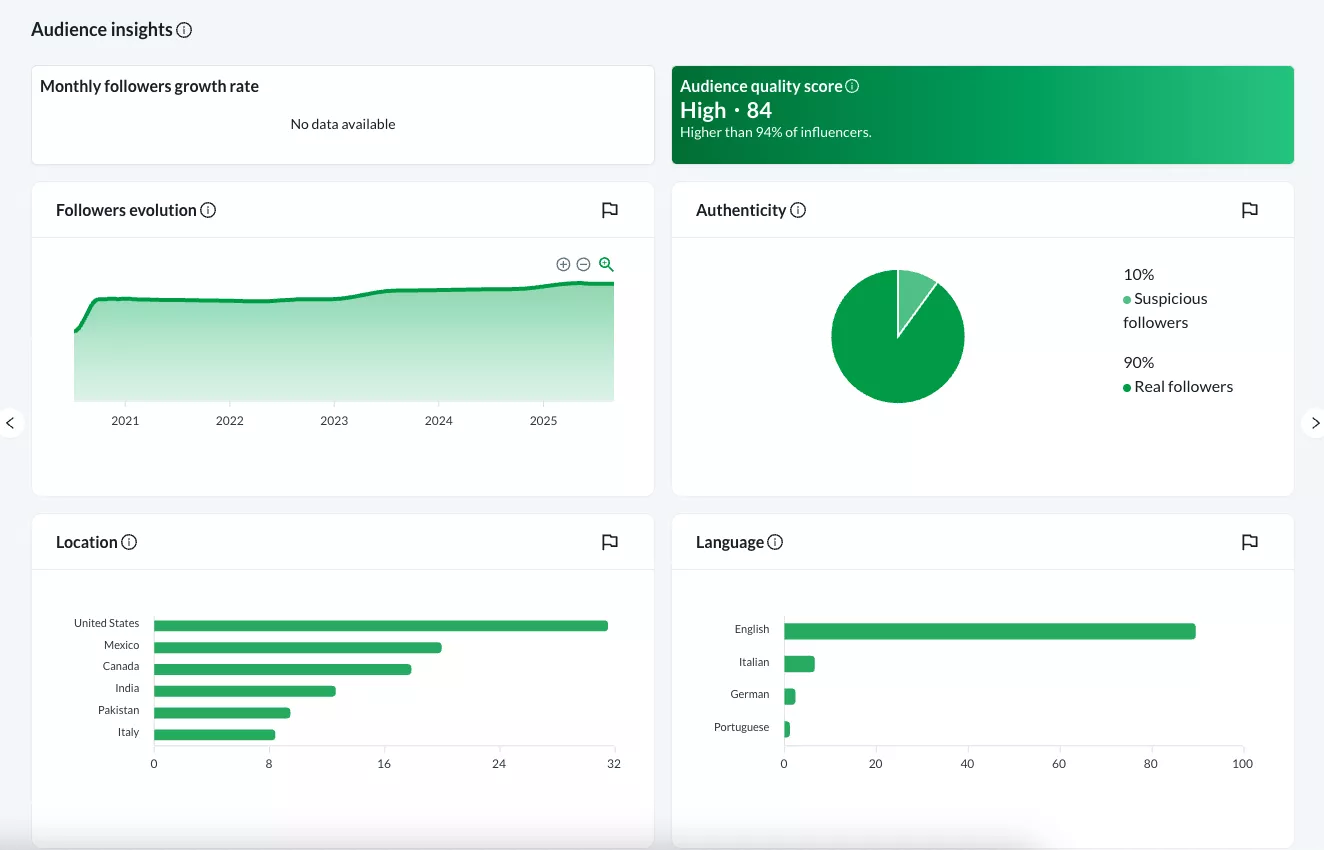
Heepsy provides detailed analytics reports for each influencer profile. The data includes follower growth trends, engagement rates, audience demographics, and posting frequency. The audience quality score rates profiles on a scale of 1-100, helping identify authentic accounts versus those with suspicious follower patterns.
The fake follower detection analyzes growth patterns, engagement consistency, and audience behavior. This feature proves valuable for avoiding influencers who have purchased followers or engagement. The system flags accounts with sudden follower spikes or unusually low engagement relative to audience size.
Audience demographic data shows age ranges, gender distribution, geographic location, and language preferences. This information helps verify that an influencer's audience matches your target market. The data quality varies by platform and influencer size, with larger accounts generally providing more detailed insights.
Engagement metrics include average likes, comments, and shares per post. For video content, you see average views and watch time. The historical data shows performance trends over time, helping predict future campaign results. The branded content analysis identifies how frequently influencers post sponsored material, which affects audience trust and campaign effectiveness.
Contact and Outreach Features
The platform provides influencer contact information on paid plans. Email addresses appear when available, along with social media handles. The quality of contact data varies, with some profiles showing outdated or incorrect information. Not all influencers in the database have provided contact details.
The list management system allows you to organize discovered influencers into boards. You can add notes, track communication status, and share lists with team members. This basic CRM functionality helps manage multiple campaigns and influencer relationships simultaneously.
Bulk outreach capabilities enable messaging multiple influencers at once through exported contact lists. The platform does not include in-app messaging, so all communication happens through external email or social media direct messages. This separation requires managing conversations in multiple places.
The data export function allows downloading influencer lists as CSV or XLS files. The exports include all visible metrics and contact information, making it easy to work with data in other tools or share with team members who don't have platform access.
Campaign Management Tools
The Marketplace feature allows brands to publish campaign briefs that influencers can browse and apply to. This reverses the traditional outreach model, letting creators come to you. Influencers can filter campaigns by location, network, category, and collaboration type. The marketplace works for gifting, paid partnerships, affiliate programs, and user-generated content requests.
Campaign tracking tools provide basic monitoring of influencer content and performance. The media gallery collects published content in one place. Real-time notifications alert you when influencers post campaign-related material. The tracking lacks advanced features like automatic performance reporting or ROI calculation.
The Shopify integration on higher-tier plans enables tracking sales generated by influencer partnerships. This e-commerce connection helps measure direct revenue impact from campaigns. The integration requires additional setup and works best for brands with established Shopify stores.
Payment processing happens outside the platform. Heepsy does not include built-in payment tools or escrow services. Brands handle influencer compensation through direct payment methods, which adds administrative work but avoids platform transaction fees.
Pricing Structure and Value
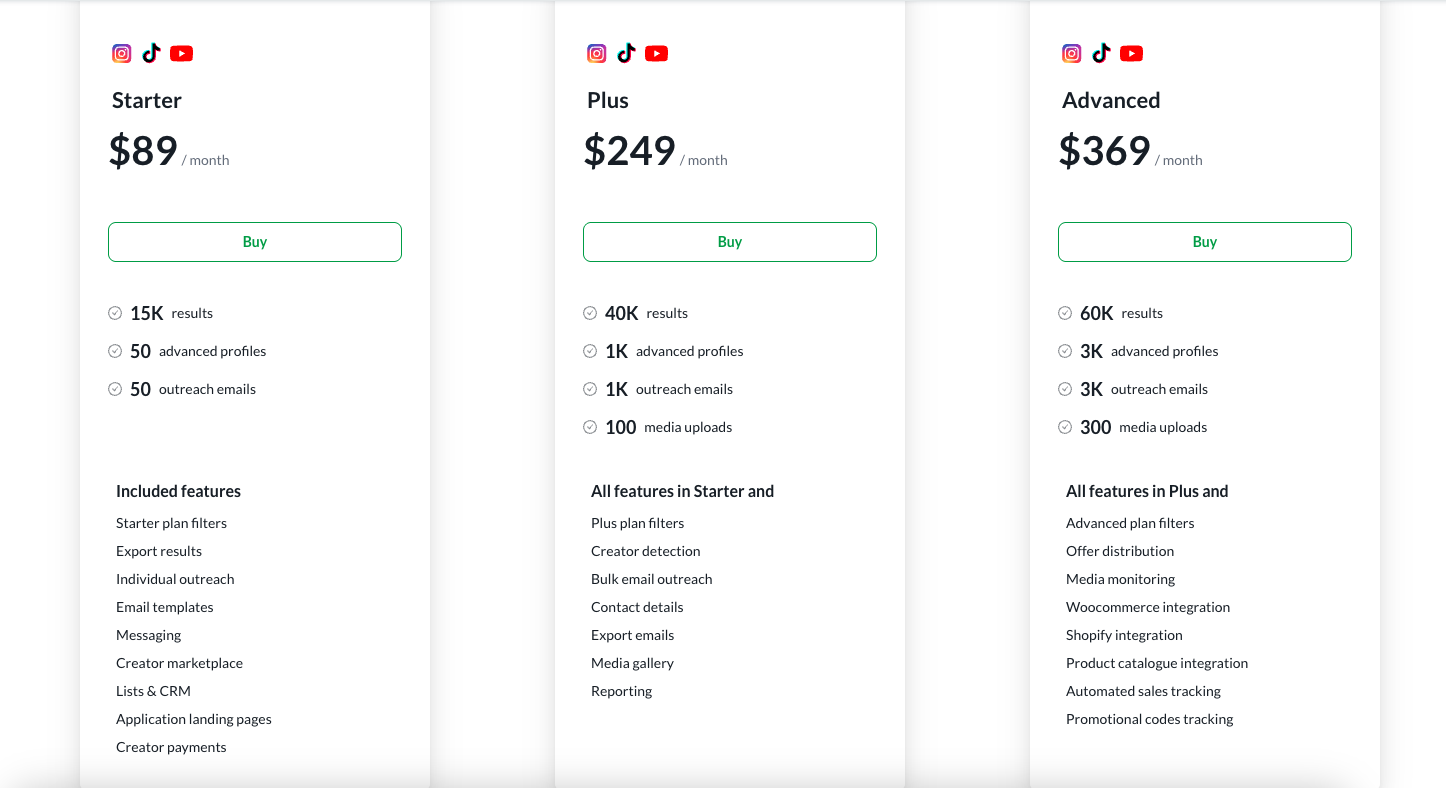
Heepsy offers three main pricing tiers. The Starter Plan costs $49 monthly and provides access to 500 analytics reports per month. The Business Plan runs $169 monthly with 2,000 reports. The Gold Plan costs $269 monthly for 5,000 reports. Annual subscriptions provide modest discounts over monthly billing.
The pricing structure counts each analytics report view as a credit. Opening an influencer's detailed analytics consumes one credit, regardless of whether you contact them. This model can deplete credits quickly during initial research phases. The credit system applies to all plans, limiting how many profiles you can fully evaluate.
The Starter Plan excludes several key features. Advanced demographic filters, authenticity scores, and influencer type filters require upgrading to Business or Gold plans. Contact information access also requires paid plans. These limitations make the entry-level option insufficient for serious campaign work.
The value proposition works best for small to medium-sized brands with consistent influencer marketing needs. Agencies managing multiple clients may find the credit limits restrictive unless purchasing higher-tier plans. Enterprise-level needs typically exceed what Heepsy offers, requiring more sophisticated platforms.
Platform Limitations
The platform coverage focuses primarily on Instagram, TikTok, YouTube, and Twitch. Other social networks lack support, which limits options for brands using Facebook, Pinterest, LinkedIn, or emerging platforms. The focus on these four networks works for most campaigns but constrains strategic flexibility.
Data accuracy varies across the database. Some profiles show outdated metrics or inactive accounts. The scraping approach means influencers may not know they're listed, leading to contact information discrepancies. Manual verification becomes necessary before reaching out to ensure influencers remain active and relevant.
The no-refund policy represents a significant risk. Multiple reviewers report dissatisfaction with this policy, particularly when discovering the platform doesn't meet their needs within days of subscribing. The inability to get refunds even for immediate cancellation requests differs from industry norms.
Customer service operates primarily through email support. Response times vary, with some users reporting quick resolutions while others experience delays. The lack of phone support or live chat limits options for urgent issues. The quality of support appears inconsistent based on user feedback.
User Experience Strengths
The interface design favors simplicity over complexity. New users typically navigate the platform successfully without extensive training. The learning curve remains gentle compared to enterprise platforms that require dedicated onboarding. This accessibility makes Heepsy approachable for teams new to influencer marketing.
The search filters provide enough granularity for most common use cases. Finding influencers in specific locations, categories, and size ranges works smoothly. The filter combinations allow targeting without overwhelming users with excessive options.
The platform stability proves reliable. Users rarely report technical glitches or downtime. The system handles concurrent searches and list building without performance issues. The consistency of operation builds trust that the platform will work when needed.
The bulk actions for list management save time when working with multiple influencers. Adding profiles to lists, exporting data, and sharing with team members requires minimal clicks. These efficiency features help teams move quickly through campaign preparation.
Common Complaints
The credit system frustrates many users who find their monthly allotment depletes faster than expected. Viewing analytics for influencers who ultimately don't fit consumes credits without value. The inability to preview profiles before spending credits increases waste.
The database quality issues appear in multiple reviews. Inactive influencers, outdated contact information, and profiles that haven't posted in years create friction. The time spent verifying profile accuracy reduces the platform's efficiency advantages.
The limited platform coverage on lower-tier plans restricts functionality. Users report discovering that features they assumed were included actually require expensive upgrades. The pricing page could communicate plan differences more clearly to prevent these surprises.
The influencer follower minimums exclude micro and nano influencers below 5,000 followers on Instagram. Brands wanting to work with smaller creators cannot use Heepsy for discovery, limiting strategy options. This floor threshold doesn't align with current trends toward smaller, more engaged audiences.
Integration Capabilities
The Shopify integration provides the most robust third-party connection. This allows tracking influencer-driven sales and measuring ROI directly. The integration requires the Business or Gold plan and involves setup steps beyond basic platform use.
The platform lacks native integrations with other marketing tools. Campaign management systems, email platforms, and analytics tools require manual data transfer through exports. This isolation increases administrative work compared to platforms with extensive integration ecosystems.
The export functionality partially compensates for limited integrations. You can download influencer data and import it into other systems. The CSV and XLS formats work with most business tools. However, this manual process lacks the automation that direct integrations provide.
Comparison with Competitors
Traditional enterprise platforms like Traackr and CreatorIQ offer more comprehensive features and deeper analytics. They serve larger organizations with complex needs and budgets to match. These tools cost significantly more, often reaching thousands monthly. Heepsy positions itself below this tier, targeting smaller operations.
Mid-market alternatives like Upfluence and GRIN provide more features than Heepsy at higher price points. These platforms include better campaign management, payment processing, and integration options. They represent the next step up for brands outgrowing Heepsy's capabilities.
Budget competitors like Collabstr take different approaches, operating as marketplaces rather than databases. These platforms facilitate direct transactions between brands and influencers. The marketplace model offers transparency on pricing but reduces control over discovery and vetting.
Heepsy's sweet spot sits between free tools with limited functionality and premium platforms with comprehensive features. The pricing makes it accessible to brands that need more than manual Instagram searches but cannot justify enterprise platform costs.
Security and Data Privacy
The platform handles influencer data collected from public social media profiles. This approach raises fewer privacy concerns than platforms requiring influencer authentication. However, the scraped data means influencers haven't necessarily consented to inclusion in the database.
User data security appears standard for SaaS platforms. The website uses HTTPS encryption and follows basic security protocols. The company has not reported major data breaches or security incidents. More detailed information about data handling practices could improve transparency.
The terms of service address account security and acceptable use. The company reserves the right to block accounts showing suspicious activity. Several reviews mention account blocks, sometimes disputed by users. The investigation process for account issues lacks transparency.
Best Use Cases
Small brands launching initial influencer campaigns find Heepsy's approachable interface and affordable pricing helpful. The platform provides enough functionality to run basic campaigns without overwhelming complexity. The learning experience prepares teams for potentially upgrading to more sophisticated tools later.
Agencies managing campaigns for multiple small clients can leverage Heepsy's database across different industries. The variety of categories and geographic coverage supports diverse client needs. The list management features help keep different campaigns organized.
Freelance marketers offering influencer discovery services can use Heepsy to source candidates for clients. The export functionality allows delivering comprehensive lists. The research capabilities support consulting work without requiring full campaign management features.
E-commerce brands using Shopify benefit from the sales tracking integration on higher plans. This connection enables measuring direct revenue impact from influencer partnerships. The ROI visibility justifies continued investment in influencer marketing.
Drawbacks to Consider
The platform works poorly for brands needing comprehensive campaign management. The lack of payment processing, contract management, and advanced reporting tools limits usefulness beyond initial discovery. Teams running sophisticated campaigns need additional tools or manual processes.
International brands working in smaller markets may find limited influencer coverage. The database strength centers on major markets and popular categories. Specialized niches and emerging markets show gaps that reduce platform value.
The credit-based pricing model creates uncertainty about monthly costs relative to value received. Teams cannot predict exactly how many influencers they'll fully evaluate before finding campaign partners. This unpredictability complicates budget planning.
The policy against refunds feels inflexible compared to industry standards. Other platforms typically offer trial periods or satisfaction guarantees. The rigid stance on refunds increases risk for brands testing the platform.
Final Verdict
Heepsy succeeds as an affordable influencer discovery tool for small to medium-sized brands. The database provides reasonable coverage of major platforms and markets. The interface makes finding and evaluating influencers straightforward without extensive training. The pricing undercuts enterprise platforms while offering more functionality than free alternatives.
The platform serves brands in early stages of influencer marketing who need structured discovery tools. Teams comfortable with basic campaign management and external payment processing find adequate value. The Shopify integration adds appeal for e-commerce operations wanting to track sales impact.
The limitations become apparent for teams needing comprehensive campaign management. Enterprise organizations and agencies running complex programs will quickly outgrow Heepsy's capabilities. The lack of advanced features, limited integrations, and credit restrictions reduce value for sophisticated users.
For appropriate use cases, Heepsy delivers solid value at its price point. The platform democratizes influencer discovery for brands that cannot afford premium tools. While not perfect, it successfully occupies the mid-market space between free tools and enterprise platforms.