![image of a customer service representative (focusing on workspace) [background image]](https://cdn.prod.website-files.com/686ff0f42c677102ebc56fac/698f284a5f2ae3ff20ae4f80_f7ihkckt5m8fchtcqldqyj-698f26cf36780.webp)
Last updated on:
April 9, 2026
The Klipsch The One Plus represents a refined approach to compact wireless audio, combining the company's heritage in speaker design with contemporary connectivity features. After extensive testing across various music genres and listening environments, this comprehensive review examines every aspect of this tabletop speaker to help you determine if it deserves a place in your home.
Overview and First Impressions
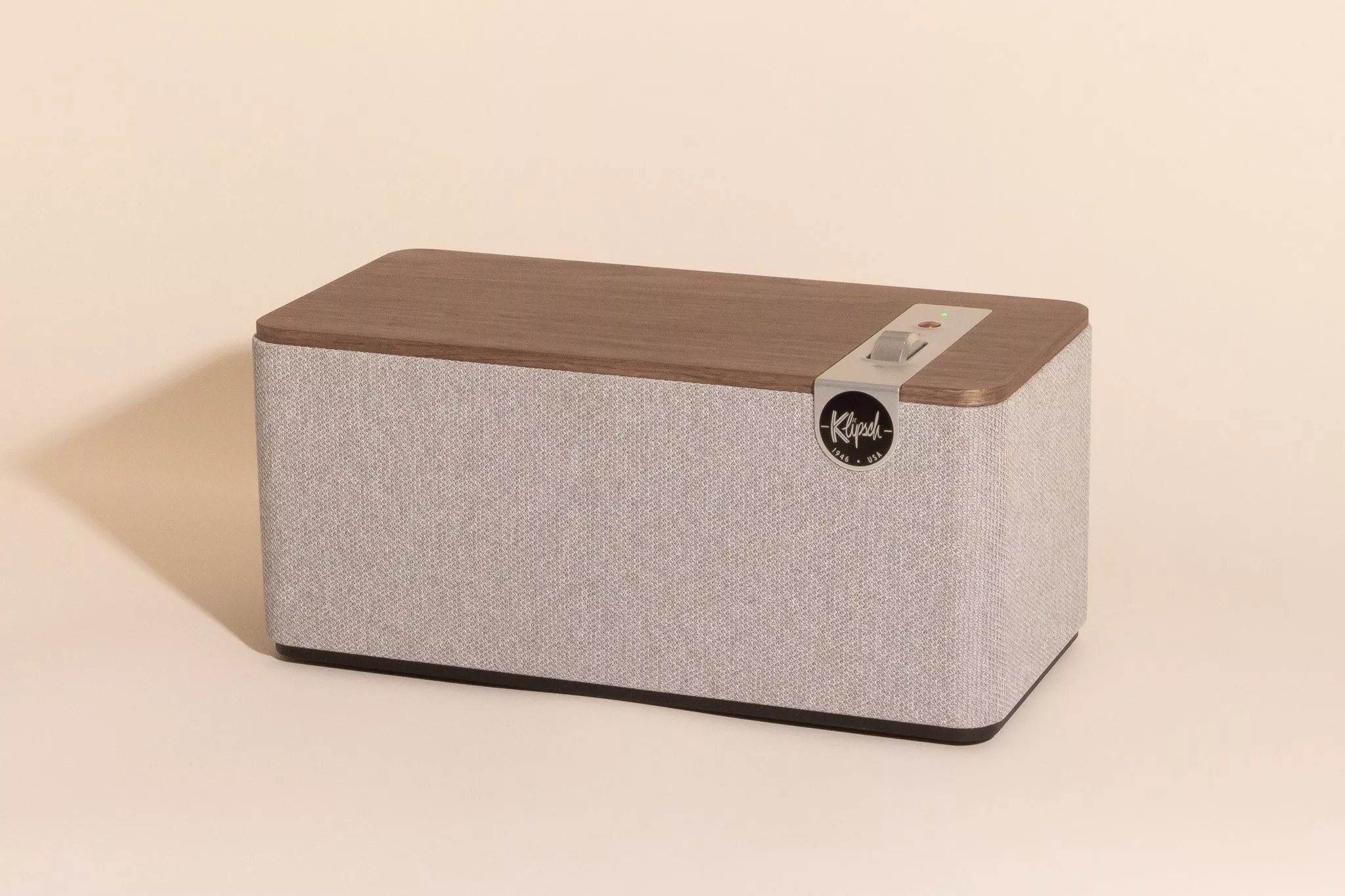
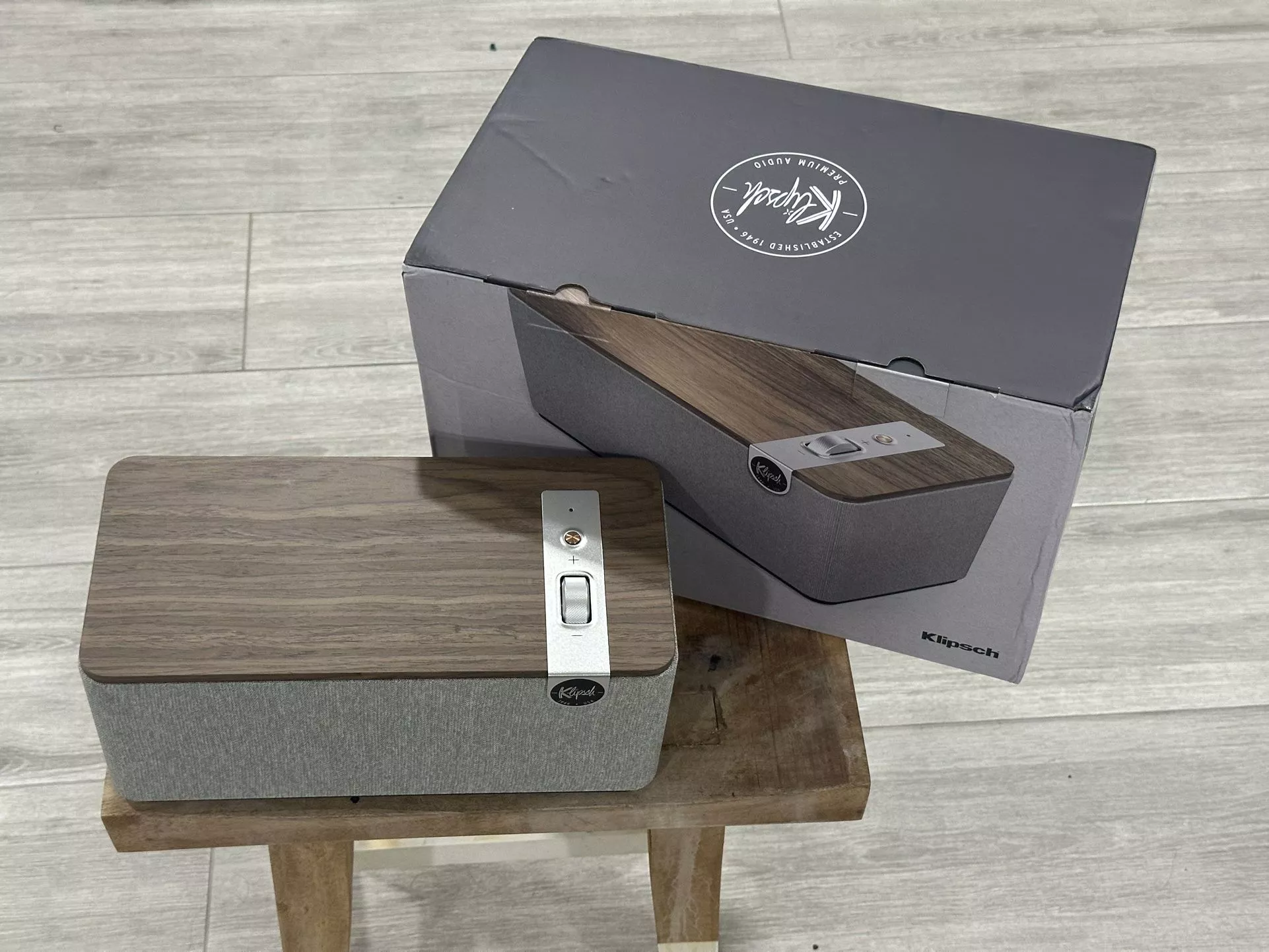
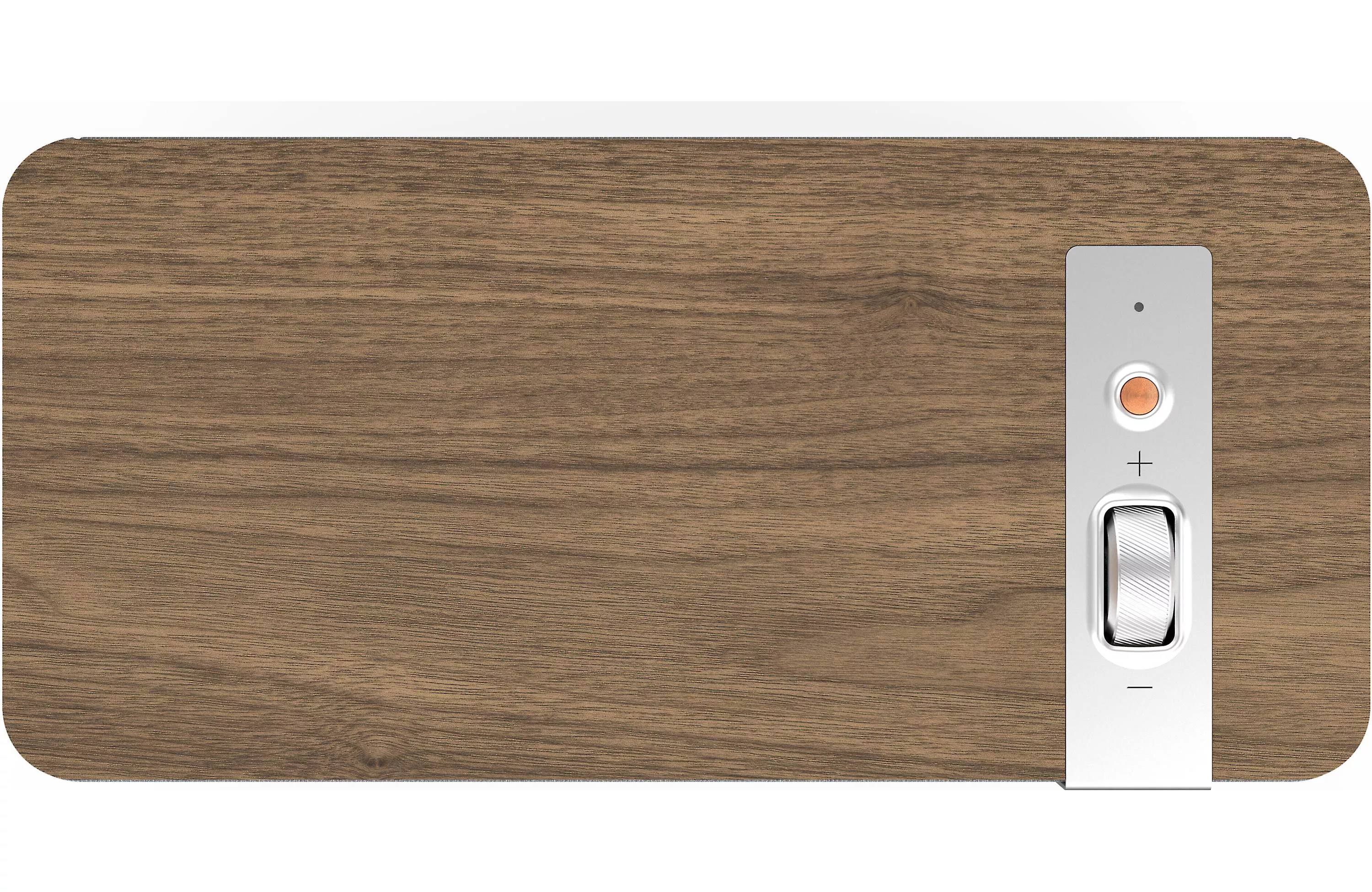
The One Plus maintains modest dimensions at 12 inches wide, 6.39 inches deep, and 6 inches tall, while its 7.9-pound weight provides reassuring heft without compromising portability within your home. The first impression centers on the quality of materials and construction. The wood veneer top, available in walnut or matte black finishes, immediately distinguishes this speaker from the sea of plastic alternatives flooding the market.
The unboxing experience is straightforward and well-executed. The speaker arrives securely packaged with all necessary accessories, including the power cable and documentation. Setup requires minimal effort - connect the power, pair your device via Bluetooth, and begin listening. The process proves intuitive enough for casual users while offering depth for those who download the Klipsch Connect app to access advanced features and customization options.
Build Quality and Construction
The build quality reflects Klipsch's premium market positioning. The cabinet employs genuine wood veneer rather than the vinyl wrap common to budget speakers, lending both visual warmth and tactile authenticity to the design. The rounded corners and balanced proportions create a mid-century aesthetic that integrates seamlessly with modern interiors without appearing dated.
The fabric grille wraps cleanly around the front and sides, protecting the drivers while maintaining visual continuity. The material resists fingerprints and dust accumulation, and the drivers remain well-protected behind it. Sound passes through the grille without audible interference or coloration.
The top-mounted volume control stands as the sole physical interface element. This precision-machined metal dial rotates with satisfying resistance, providing tactile feedback for volume adjustments. The Klipsch medallion logo sits prominently centered on top, reinforcing the heritage brand positioning. The minimalist control approach maintains aesthetic purity but necessitates using your source device for playback functions.
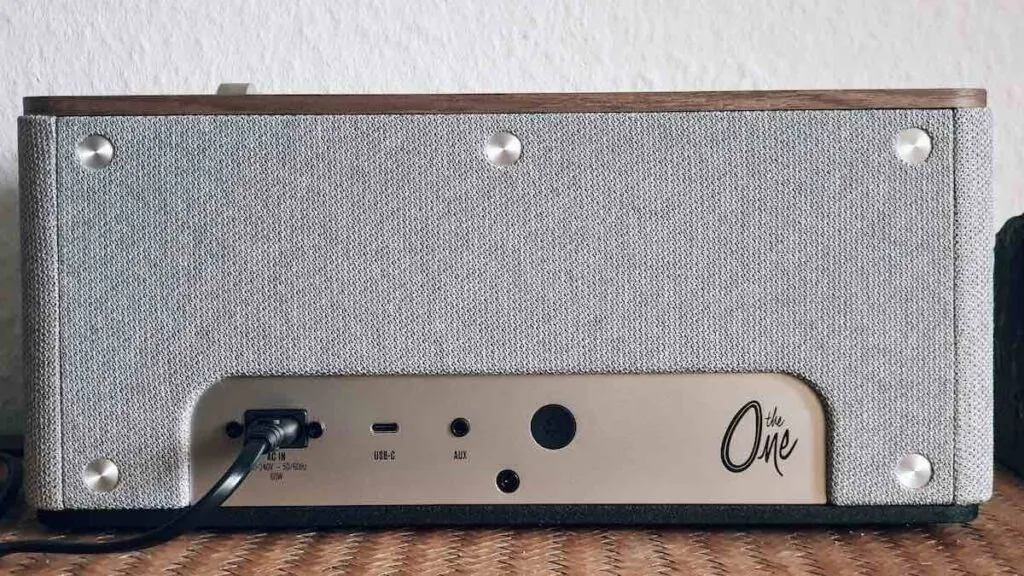
The rear panel houses all connectivity in a logical, accessible layout. The USB-C port, 3.5mm auxiliary input, and source selection button feature clear labeling and secure connections. The power connection uses a standard cord rather than an external adapter, maintaining a cleaner appearance and easier cable management.
Audio Performance and Sound Quality
The audio performance justifies the premium pricing and represents the speaker's core value proposition. The 2.1 stereo configuration employs two 2.25-inch full-range drivers paired with a 4.5-inch woofer, bi-amplified for 60 watts total output. This driver arrangement creates a surprisingly expansive soundstage that belies the compact footprint.
The tonal balance leans slightly warm without sacrificing clarity or detail. Midrange reproduction excels, with vocals positioned forward in the mix and maintaining intelligibility even at lower volumes. This vocal clarity extends across both male and female voices, handling spoken word content and singing with equal competence. Similar to how the Positive Grid Spark 2 delivers exceptional clarity for practice sessions, the One Plus maintains pristine vocal reproduction across all listening levels.
Bass response impresses given the compact form factor. The 4.5-inch woofer produces bass extension down to 55Hz according to Klipsch's technical specifications, which exceeds expectations for a tabletop speaker. The bass feels controlled and articulate rather than boomy or loose. Electronic music and hip-hop tracks reveal satisfying low-end presence, though the speaker naturally cannot replicate the chest-thumping impact of larger systems or dedicated subwoofers.
High-frequency reproduction maintains cleanliness and detail without crossing into harshness. Cymbals and high-hat patterns emerge clearly, and string instruments retain their natural shimmer and sparkle. Some listeners may find the treble slightly restrained compared to speakers emphasizing brightness, but this tuning choice prevents listening fatigue during extended sessions—a thoughtful balance for a speaker intended for daily use.
The speaker handles various volume levels with consistent performance. At lower volumes, the tonal balance remains intact, which proves rare among compact speakers. Many small speakers lose bass presence and overall character at quiet listening levels, but the One Plus maintains its sonic signature. At moderate volumes, the speaker fills medium-sized rooms with ease. When pushed to higher volumes, it remains composed without obvious distortion, though bass compression becomes slightly evident at maximum output.
The soundstage creates impressive separation between instruments, allowing listeners to distinguish individual elements within complex arrangements. The stereo imaging functions effectively when properly positioned, generating a sense of width that extends beyond the physical boundaries of the speaker. This performance elevates the One Plus beyond background music duties into territory suitable for attentive, engaged listening.
Connectivity and Wireless Performance
Bluetooth 5.3 provides the primary connection method for most users. The pairing process executes simply and reliably, with the speaker remembering up to eight devices. Once paired, devices reconnect automatically when within range. The wireless range extends approximately 40 feet in unobstructed space, though walls and obstacles reduce this distance in typical home environments.
The Bluetooth connection maintains stability during normal use. Audio quality over Bluetooth proves satisfying, though the compression inherent to wireless transmission becomes detectable when compared directly to wired connections. For casual listening scenarios, most users will find the Bluetooth performance entirely acceptable. Consumer Reports notes that Bluetooth 5.3 delivers improved stability and connection reliability compared to previous iterations.
The USB-C port serves dual purposes. Connecting a computer or compatible device enables digital audio playback, bypassing Bluetooth compression for potentially improved fidelity. The port also supports reverse charging, allowing phone charging during music playback—a convenient feature for bedside or desktop placement where the speaker remains constantly powered.
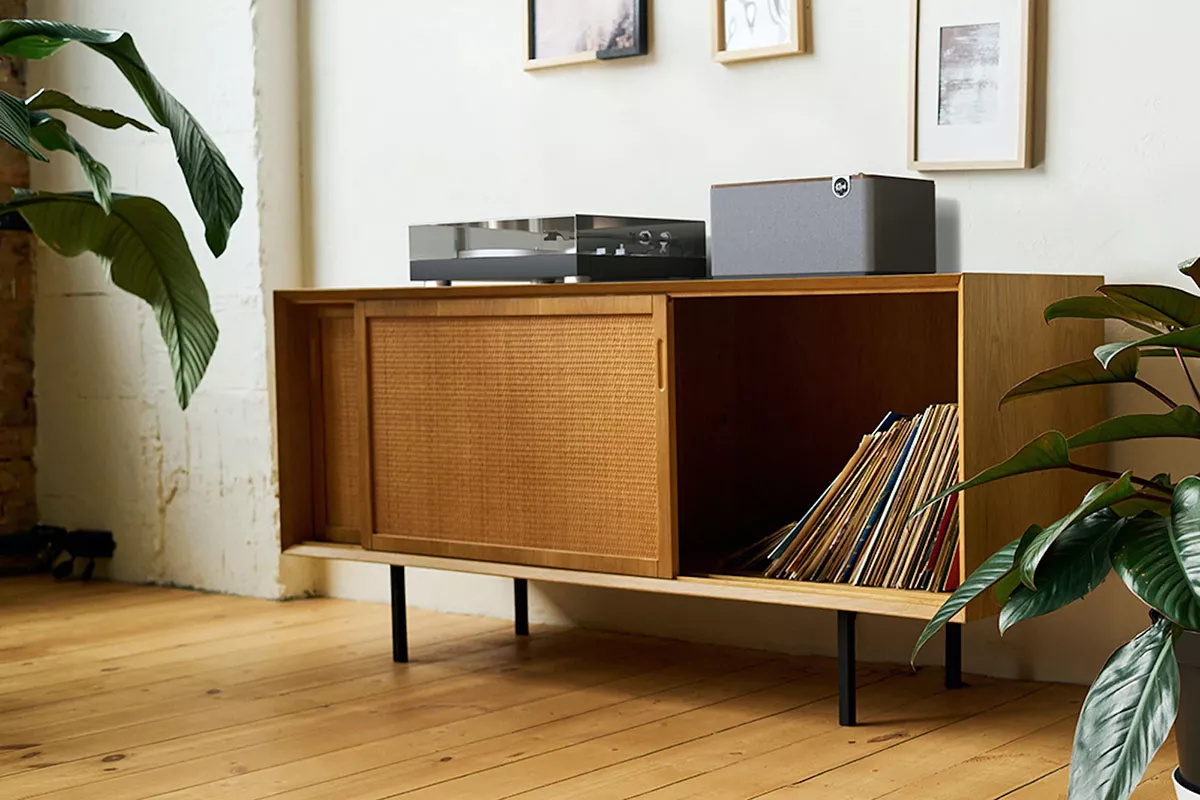
The 3.5mm auxiliary input provides analog connectivity for devices lacking Bluetooth or USB-C. Record players equipped with built-in preamps, legacy audio equipment, and portable music players connect seamlessly. The auxiliary input delivers clean sound quality, though the One Plus lacks a dedicated phono preamp for turntables without line-level outputs.
The source selection button on the rear panel cycles between Bluetooth, USB-C, and auxiliary inputs. A brief press switches sources, while a longer press activates the specific input. The system functions logically once understood, though the absence of visual feedback on the button itself requires a brief learning period.
App Control and Features
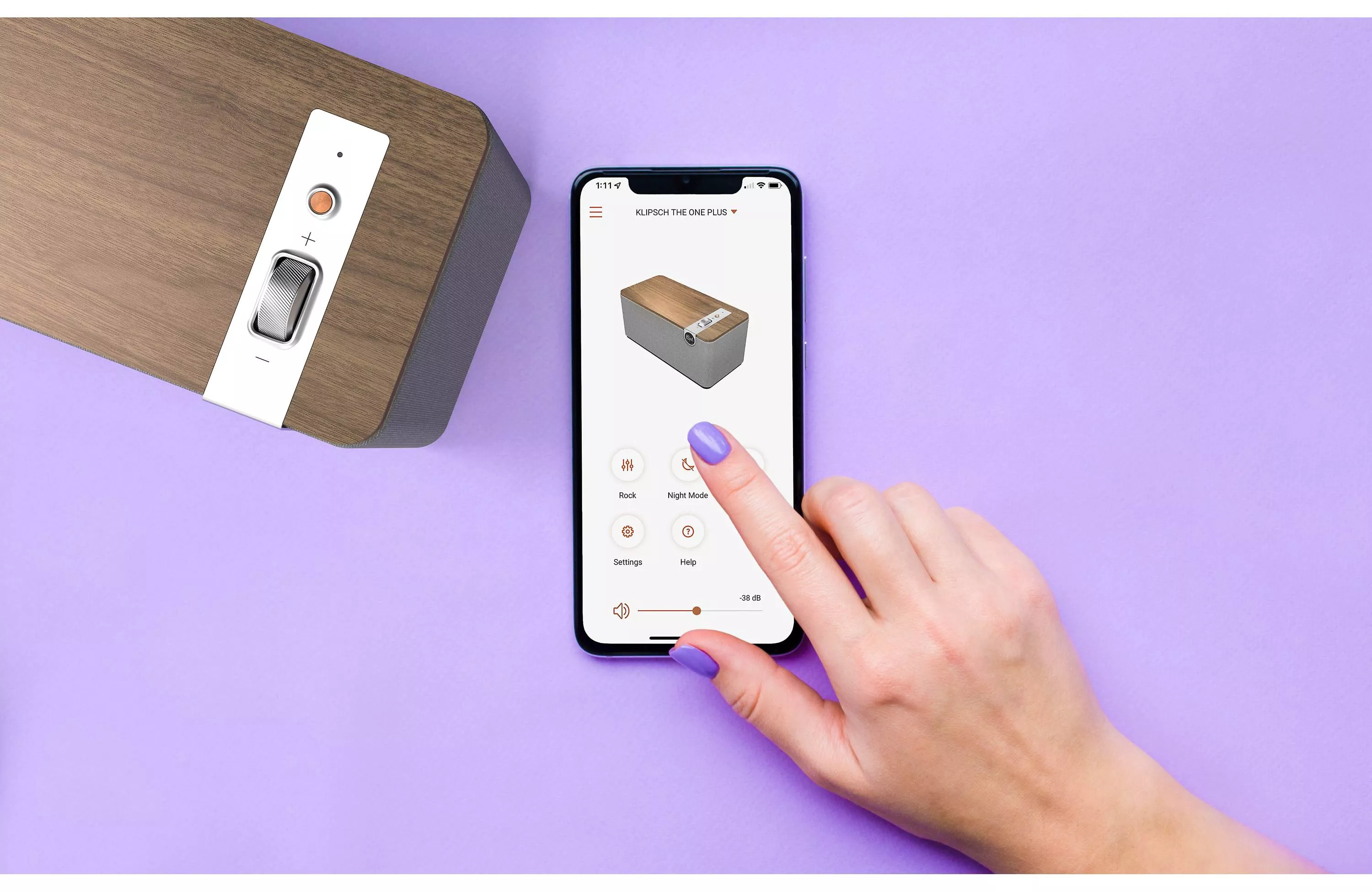
The Klipsch Connect app extends the speaker's capabilities significantly beyond basic playback functions. The interface presents a clean, intuitive layout that avoids overwhelming users with excessive options. The connection process executes quickly, with the app automatically discovering the speaker when both exist on the same network.
The equalizer provides five preset options: Flat, Bass, Vocal, Treble, and Rock. Each preset adjusts the tonal balance for different content types or personal preferences. The Flat setting offers the most neutral reproduction, while Bass emphasizes low frequencies and Vocal brings midrange elements forward. A custom EQ option enables manual adjustment across multiple frequency bands for precise tailoring.
Night Mode addresses a practical concern for apartment dwellers and late-night listeners. Activating this mode reduces bass output, preventing low frequencies from traveling through walls and floors to disturb neighbors or sleeping household members. The feature executes its purpose effectively, maintaining listenable sound quality while minimizing disturbance.
Broadcast Mode enables connecting multiple One Plus speakers for synchronized playback throughout your home. Up to 10 speakers can link together, all reproducing the same audio source. The feature requires a double-press of the rear service button and functions reliably once configured. Volume can be adjusted independently for each speaker, allowing balanced levels across different rooms.
Firmware updates arrive through the app, ensuring the speaker receives ongoing improvements and bug fixes. The update process requires only a stable connection and several minutes, maintaining the speaker's relevance as technology evolves.
Practical Considerations and Use Cases
The One Plus proves well-suited to several specific scenarios. As a desktop speaker, it provides quality audio for computer work, video conferences, and music listening without consuming excessive desk real estate. The compact footprint fits comfortably on most work surfaces while delivering room-filling sound that transforms the listening experience.
In bedroom or small living room applications, the speaker serves capably as a primary audio source. The sound quality exceeds most television speakers substantially, enhancing video streaming and casual music listening. The lack of battery power means the speaker maintains a fixed position, but this eliminates charging concerns and allows for better sound quality through the elimination of battery bulk and associated compromises.
Kitchen and home office environments benefit from the speaker's ability to fill space with clear, balanced audio. Podcasts and audiobooks sound particularly engaging through the One Plus, with exceptional vocal intelligibility. Background music during meal preparation or work sessions remains balanced and non-fatiguing, supporting rather than demanding attention.
The speaker lacks portability due to its power requirement. This represents a deliberate design choice, trading battery operation for superior sound quality and eliminating the inconvenience of charging cycles. The decision makes sense for a speaker intended for fixed locations rather than outdoor gatherings or travel use.
The absence of smart home integration limits appeal for users invested in voice control ecosystems. The speaker contains no built-in microphone, offers no voice assistant support, and provides no Wi-Fi connectivity. For users seeking a straightforward, high-quality audio solution without smart features, this isn't a drawback. For those desiring Alexa or Google Assistant integration, the One Plus requires connecting an external smart speaker to the auxiliary input.
Drawbacks and Limitations
The minimal physical controls necessitate using your phone or source device for playback control. The absence of dedicated play/pause buttons on the speaker itself may frustrate users preferring tactile control. The design choice maintains the clean aesthetic but reduces operational convenience.
The price point positions the One Plus in competition with both premium Bluetooth speakers and entry-level powered bookshelf speakers. At $249 retail, the speaker costs substantially more than basic wireless options while remaining accessible compared to audiophile equipment. The value proposition depends heavily on whether you prioritize design aesthetics and compact form over raw performance capabilities.
The lack of battery power limits use cases compared to portable speakers in similar price ranges. The requirement for constant power connection means the speaker maintains a fixed position. This isn't a limitation for home use, but it eliminates outdoor gatherings, beach trips, and other scenarios where portable speakers excel.
The rear-mounted controls and connections can prove awkward to access when the speaker sits against a wall. Changing sources or adjusting connections requires either pulling the speaker forward or reaching behind it. Front or side-mounted controls would improve accessibility without significantly compromising the design aesthetic.
The speaker occasionally enters power-saving mode during extended periods of silence, requiring reconnection from your device. Some users report this as an intermittent issue rather than consistent behavior. The auto-shutoff conserves power but can interrupt the experience when resuming playback after a pause.

Value Proposition and Competition
The One Plus competes in a crowded market segment featuring diverse approaches to compact audio. The Marshall Kilburn III offers portable power and comparable sound quality at $379, though it sacrifices the refined design aesthetic. The Bose SoundLink Home provides similar dimensions and functionality at $219 with battery operation, but the sound profile differs with less bass emphasis.
The Sonos Era 100 costs $249 and includes smart home integration, Wi-Fi streaming, and multi-room capabilities. RTINGS speaker testing demonstrates that the Sonos requires app control for all functions and commits users to the Sonos ecosystem. The One Plus offers greater connection flexibility and maintains traditional physical controls for volume adjustment.
For those considering more substantial home audio configurations, the Polk Audio Signature Elite ES50 delivers floor-standing performance with Hi-Res Audio certification and deeper bass extension. The One Plus provides similar quality audio reproduction in a dramatically more compact package better suited to smaller spaces or supplementary listening positions.
Budget alternatives like the Tribit StormBox deliver surprising sound quality at $129 but employ plastic construction and lack the refined tuning of the One Plus. The build quality difference becomes immediately apparent upon handling, as does the more sophisticated sound signature achieved through premium drivers and careful acoustic engineering.
The value proposition strengthens when considering the One Plus as part of a multi-speaker setup utilizing Broadcast Mode. The ability to create a synchronized system across multiple rooms adds functionality that single-speaker competitors cannot match, transforming the speaker from a standalone solution into a flexible whole-home audio system.
Final Verdict
The Klipsch The One Plus represents a well-executed tabletop speaker that delivers on its core promise of quality sound reproduction in a compact, aesthetically pleasing package. The audio performance exceeds expectations for the size category, with particular strengths in midrange clarity and bass extension. The build quality and design aesthetic justify the premium positioning, creating a speaker that looks appropriate in refined interiors while avoiding the anonymous appearance of many contemporary wireless speakers.
The speaker works best for users who value sound quality and design over feature proliferation. If you require smart home integration, extensive physical controls, or portable battery operation, other options serve those needs more effectively. For home listeners seeking clear, balanced audio from an attractive speaker that doesn't dominate the visual space, the One Plus delivers consistent, engaging performance.
The learning curve remains minimal, making this accessible to users without audio expertise. The physical setup takes minutes, and the app provides straightforward control without overwhelming options. The sound quality impresses immediately, requiring no tweaking or adjustment to achieve satisfying results straight from the box.
For the right user, the Klipsch The One Plus represents a sound investment in daily listening quality. The speaker handles music, podcasts, and video audio with equal competence while maintaining a visual presence that enhances rather than detracts from your living space. The absence of certain features represents a conscious choice that maintains focus on what matters most: the sound.